Pendle.AI - Cycle 7, Week 8
The Architecture of Ethical Governance for Human Cooperation
Why do some things capture our attention while others go unnoticed?
Information that changes one person's life means little to another. We recognize value through our experiences, desires, fears, and daily lives. This psychology creates both hope and fear. Even when unfamiliar technology might improve our lives, we may hesitate to approach it if we don't understand how it works or what risks it carries.
You open your phone in the morning to an endless feed. A friend's wedding announcement, NVIDIA's latest robotics launch, fan posts about BIGBANG's overseas tour, a fitness model promoting a new protein bar, and reviews of parenting resources and children's attractions. Each matters to someone. Which one matters to you?
A bride-to-be will save dozens of wedding dress photos. An investor will linger on interest rate news that others scroll past. Potential home-buyers like posts detailing mortgages and tax-saving options. Information is there, waiting for your attention.
Social media algorithms learn what we view, react to, and engage with. But repeated exposure does not guarantee interest when something has no personal meaning. As a founder, you may introduce your product to hundreds of people every day. As an artist, you want people to love and buy your work. If you work with a local community, you want more people to participate.
What matters to them doesn’t always matter to you. There are billions of potential customers out there, but each of them has their own life. You need to offer something they want to make part of that life. So what captures attention, builds trust, and makes someone want to participate?
I. Relevance Before Recognition – We are drawn to what makes our lives better
“The deepest principle in human nature is the craving to be appreciated.” — William James
Imagine coming home exhausted from work to someone who notices without being told and says, “You had a hard day”, or a stressful morning juggling a deadline and childcare, when a coffee machine makes you a delicious cup of coffee at the touch of a button. Perhaps it’s a partner who treasures your Gundam collection carefully built since childhood, rather than dismissing it as just toys. Or mentors and friends who show you a future you never imagined, making you feel that, with them, you could become wiser, stronger, and more confident.
We are compelled toward these experiences. We give them our time, money, and emotions. We want to keep them in our lives. Not simply because they are convenient or better than the alternatives. We believe they will protect what matters to us, understand who we are, and help us build a better life.
Robert Greene's The Art of Seduction remains widely read because it addresses familiar questions: What attracts us to others? Why do we seek attention and recognition? Greene is not a psychologist, and his book is not a scientific study. Still, it offers insightful observations about human relationships. We may love someone deeply but devote our time or money to others. Choices are also connected to our own beliefs and values. We are moved by what we choose to value and believe in. But attraction and trust are different.
Social media algorithms predict our interests, while advertising stimulates our desires. But why build another system that simply, sometimes cravenly, captures attention? What helps people without manipulating them is an open invitation; help people connect to their own lives and decide for themselves what is valuable.
II. When a Promising Future Meets Fear – Why isn't a technology that opens new doors always welcomed?
At Pendle, we are developing Koke-chan, an AI-powered consecutive interpretation system. Our goal is to create opportunities for anyone to overcome cultural and language barriers to discover new possibilities. We want to reduce missed opportunities caused by experiential barriers, support people's ambitions, and reveal value that might otherwise remain unseen.
Koke-chan is also being designed to minimize token use and computing resources. With consideration of the energy and resources required for AI processing, we aim to develop technology that is sustainable from an environmental, social, and governance (ESG) perspective.
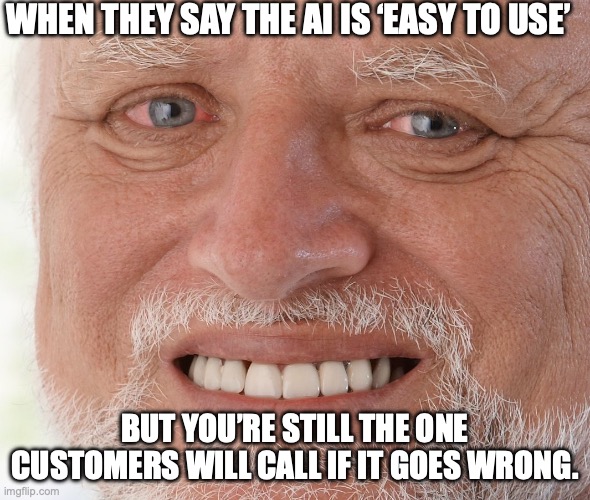
We proposed introducing Koke-chan to local shop owners in Kyojima, a traditional neighborhood in Tokyo. But the response was not entirely positive. "We might not be able to handle it if something goes wrong."
For shop owners who have built up relationships over generations, adopting new technology means more than adding a convenient tool. Imagine their perspective. Will customer conversations be recorded? Who handles the information if someone shares a phone number or address? Who is responsible if data leaks or the system gives incorrect information? Someone familiar with technology can examine the system and identify specific risks. However, shop owners who spend their days serving customers, managing inventory, and running their businesses have no time or interest in understanding its internal workings. Nor should they.
What looks like a doorway to the future for us may look like a threat to the life someone else has spent decades cultivating and protecting. Explaining the technology's benefits more enthusiastically only goes so far. Progress comes from understanding what people fear losing, what could go wrong, and how problems could be prevented. This challenge extends beyond Kyojima to Japan at large.
III. Danger vs. Dread – Is all AI really dangerous?
"Apparently, AI steals personal information." How would you react to that headline? Your credit card details might be exposed. Your work documents might be stolen. Someone might use your personal information without your knowledge. You may not know exactly what could happen, but the threat remains.
In October 2026, Japan has faced a series of cyberattacks, personal data breaches, and service disruptions. The government issued warnings. Such problems deserve serious attention, but we need to distinguish two things.
First, AI storing or processing information is not the same as someone stealing and misusing that information. Second, does a cyberattack involving AI carry the same risks as using an AI translation tool in daily life?
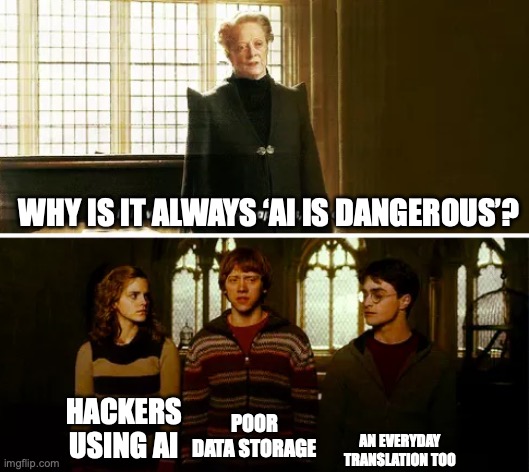
An attacker using AI to identify system vulnerabilities. A company's servers accessed without authorization. A service storing user inputs improperly. These involve different causes, responsibilities, and safeguards. If we reduce all of them to "AI is dangerous," we lose sight of the actual risks.
An unexplained sound at night can make us imagine ghosts or intruders. At 3 a.m., you hear a noise somewhere in your house. Is someone breaking in? Is it a ghost? You are too frightened to step into the hallway. But if the sound comes from wind entering through a window, the solution is to close the window and seal the gap, not remain frightened under the covers. If there really is an intruder, you need to get to safety and call for help. What matters is identifying the cause and choosing the right response instead of letting fear decide.
We faced a similar challenge during the early stages of COVID-19. With limited information about an unfamiliar threat, people had to rely on evolving news reports and official warnings to make decisions. Communicating danger is necessary. But when we cannot distinguish possible risks from confirmed facts, or isolated incidents from threats to society as a whole, anxiety only grows. When danger is real, inaction can allow harm to spread. Strong intervention, however, raises questions about necessity and authority. Political decisions carry risks both in acting and in failing to act.
Trusted news organizations have a responsibility to explain what is known and what remains uncertain. Japan is also moving beyond responding to cyberattacks after they occur. Its measures include information sharing between government and industry, and legally defined powers to access and neutralize the sources of attacks. Related provisions took effect on October 1, 2026. But the Japanese government did not order a complete shutdown of AI. A company shutting down systems to prevent further damage from a cyberattack is different from banning AI use across society.
Are we rejecting useful technology simply because we do not understand these differences? Understanding danger does not mean ignoring it. It means protecting what matters without losing opportunities to unnecessary fear.
IV. From Recognition to Trust – Interest alone does not lead to action
“The only way to make a man trustworthy is to trust him.” — Henry L. Stimson
We do not invest time or money in something just because we know it exists. First, we need to understand how it relates to our lives and whether it aligns with our needs and values. Only when we develop enough trust to accept some uncertainty do we begin to consider getting involved.
In Weeks 5–6, we explored how contact with people and cultures can develop into resonance and attachment. But more contact does not guarantee attachment. A strong impression does not ensure understanding. We may feel a connection but hesitate to participate without trust. Even when we trust something, we may lack the time, money, or capacity to take responsibility for it.
Awareness → Attention → Understanding → Resonance → Trust → Participation → Continued Engagement
People move through these stages in different orders. Each involves different psychological and practical conditions.
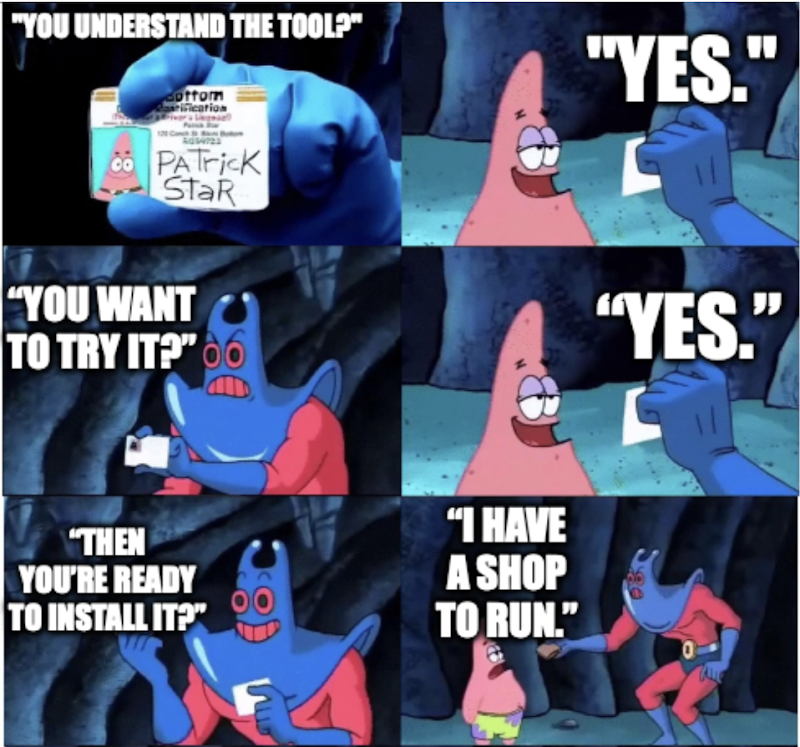
A shop owner in Kyojima may understand Koke-chan's potential and want to try it, but doesn’t want to interrupt their daily work for installation and training. Better marketing won’t make them a willing customer. They need a way to try it easily, without a major time commitment. They need to know what information the system handles, what happens if something goes wrong, and who is responsible.
Understanding, resonance, trust, and participation require distinct perspectives. If we assume people do not participate because they are not interested, we may overlook the barriers that actually prevent them from taking part.
V. Designing the Invitation – The difference between influence and manipulation
“People don't buy what you do; they buy why you do it.” — Simon Sinek, Start with Why (2009)
An invitation that moves people requires understanding what they value, what they want to protect, and what they fear. Then we identify where our proposal connects with their reality and show its value in a way they can understand and verify.
The goal is not to tell people what they want to hear. It is to connect what we can genuinely offer and what they actually need. Imagine a partner who understands the Gundam collection you have treasured since childhood. This makes you happy, but not because they recognize its market value. They understand something important about you through what you love.
This notion applies to products and services. Customers do not look only at features. They consider how a product could change their lives, protect their time and peace of mind, or help them become the person they want to be.
But understanding customer psychology also creates an ethical boundary. Once we know what people fear and desire, we can use those emotions to influence their behavior. Exaggerating fear pressures someone into buying. Exploiting the need for recognition keeps someone engaged. Making people feel guilty makes them hesitate to say no. These marketing tactics are not invitations to discover value. Understanding what matters to someone does not give us the right to make decisions about their life.
Even a well-intentioned proposal requires reevaluation if it burdens people or restricts their freedom to choose. At the same time, waiting for everyone's consent may cause serious harm. This is especially true for infectious disease outbreaks, disasters, or major cyberattacks.
When is strong leadership or intervention justified? Good intentions alone are not enough. We must consider the severity of the danger, urgency, legal authority, alternatives, and accountability.
VI. Sunday Alignment – Capturing attention is not the same as earning trust
When different talents and cultures meet, new value can emerge. Exploring that potential willingly, however, requires an accessible entry point. Attention does not ensure relevance, trust, or participation.
We can capture attention, but trust cannot be built on promises alone. We must understand people's concerns, communicate facts accurately, explain what we can and cannot do, and let them verify the value through experience. That is how relationships have a chance to deepen.
For Founders:
Are you solving the problems your customers actually face? Do people avoid your product because they do not understand its value, or are you missing their concerns, responsibilities, and daily constraints? Building a good product and making it easy and safe for people to try are two different tasks.
For Investors:
Are you measuring attention or the reasons people stay? Beyond user acquisition and growth rates, do you understand why people keep using a product or why they leave? Attracting short-term interest is not the same as earning long-term trust. Financial data only partially explain why people keep a product in their lives.